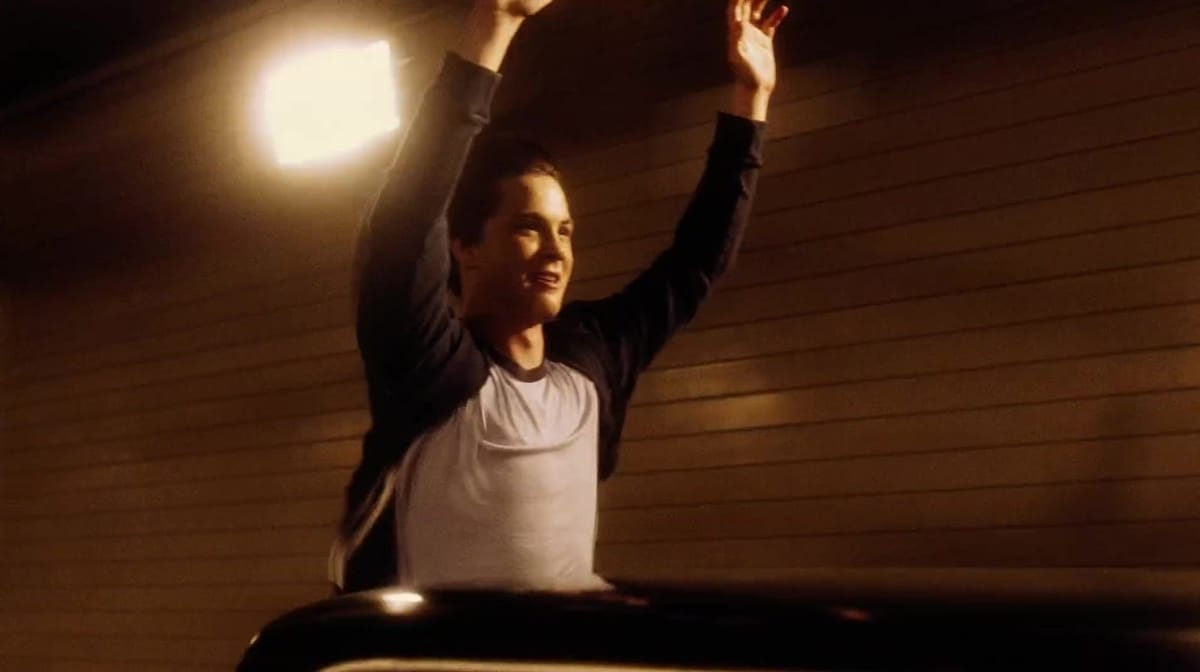
There was a time in my life when I would have traded anything to live in the 1980s. The neon-soaked music videos, the cassette tapes, the John Hughes movies that made being a teenager look like a series of carefully scripted monologues and heartbreaks lit by the soft buzz of streetlamps. My 2007 self, hunched over a shared family desktop computer in the living room, fully believed that the 80s had everything my real life lacked: drama, meaning, permanence.
But now, at 29, I know better. Because the era that shaped me was already happening. I was living in it. I just didn’t know how much it would mean to me until it was gone.
I remember the exact layout of my Friendster page. Black background. Neon green text. The embedded autoplay music? Thunder by Boys Like Girls. Cringe? Sure. But back then, the internet didn’t punish you for feeling and caring too much. Back then there is no demand to be nonchalant. You could be messy and melodramatic. Your profile was a shrine to your interior world, and that song was my prayer.
Learning HTML wasn’t something I did for school; it was something I did so I could express myself. I copied lines of code from forums and pasted them into the "About Me" section to center-align my angst and glitter-gif my teenage angst. On MySpace, I ranked my friends in a way that would be considered psychological warfare today. It was petty. It was perfect.
In those years, I was both more and less myself than I am now. I curated my identity like a playlist: song lyrics, quotes from obscure movies and John Green novels, SKINS screencaps with the contrast cranked all the way up. I loved the feeling of being anonymous yet known. There was freedom in the way we performed who we were becoming. There were no consequences yet.
I got goosebumps every time I heard the words: "Previously on Supernatural." It meant escape. It meant night had fallen and the world was quiet enough for me to drown in someone else’s mythology. When "Carry On Wayward Son" played, I wasn’t just watching the Winchesters. I was them... hunting ghosts, running from grief, trying to make sense of a world that never really explained itself.
I would stay up all night searching for torrents. Some episodes took three hours to download, some three days. I hoarded AVI files in USBs like they were sacred texts. I learned patience. I learned that sometimes the hunt was part of the being alive.
And then came the movies. The first time I watched In the Mood for Love, something broke open inside me. Wong Kar Wai didn’t just tell stories; he sculpted them in shadow and cigarette smoke. I watched Chungking Express and wondered if I would ever love anyone as much as those characters loved their fleeting moments. I wanted to live in slow motion. I wanted every hallway and train station to mean something.
We didn’t have TikTok dances or BeReal updates. We had Photobucket links, Yahoo and MSN Messenger statuses, and Tumblr tags like #depressingthoughts and #spilledthoughts. We made collages out of our confusion. We stitched together identities using anime avatars, indie lyrics, and grainy webcam photos.
The beauty of it all was that we didn’t know who we were, and no one expected us to. That kind of uncertainty felt expansive, not suffocating. You could disappear into a fandom, fall in love in a comment thread, break up via AIM. There were fewer eyes watching. More room to fail, to be weird, to start over.
I sometimes think about how much of myself I revealed in those anonymous posts. The frustrations and feelings I couldn’t say out loud, the existential dread I couldn’t yet name. I confessed it all to the void, and the void replied with reblogs and messages that said, simply: "guppy"
If you ask me now why I feel nostalgic for that era, it’s not just the aesthetic. It’s the possibility. We were on the brink of everything. Technology hadn’t become intrusive yet. The internet was a tool for becoming, not a mirror demanding perfection.
Today, the platforms are cleaner. More "user-friendly." But in that sanitization, we lost something. We lost the chaos. The clutter. The rawness of being half-formed and wholly expressive.
Now, we are expected to have brands instead of personalities. We curate ourselves for consumption. Back then, we curated for connection. We weren’t trying to sell. We were trying to be seen.
I keep thinking about that John Hughes fantasy. In The Breakfast Club, a group of misfits spend one Saturday together and suddenly understand each other. It’s beautiful. But it’s also fiction. Real teenage connection didn’t come in monologues; it came in shared playlists, blog comments, and LimeWire downloads gone wrong.
My nostalgia isn’t a longing for a perfect time. It’s a longing for the imperfections that felt real. For the glitches and pop-ups and broken Photobucket links that meant you were trying. That you cared enough to put yourself out there, even if it meant being misunderstood.
Sometimes, I scroll through archived screenshots of my old profiles. I find posts that say things like, "I feel like I’m disappearing," or "I just want something to mean something."
I wish I could go back and tell that version of me that those words mattered. That the quiet act of posting them was a form of survival. That they were not pathetic; they were proof of life.
And here I am now, typing this in a world that has become louder but less intimate. I miss the hush of 3AM blog posts. I miss feeling like I could be anything because nothing was permanent yet. I miss being anonymous in a crowd of people also trying to figure it all out.
Maybe that’s what growing up in that era gave me: the sense that becoming is allowed. That identity is a process, not a product. That being known is not the same as being watched.
We built entire versions of ourselves in comment threads and custom cursors. We were lonely, but we were never truly alone.
Now, when people talk about the 80s with that dreamy look in their eyes, I get it. Everyone needs an era to belong to. But for me, it wasn’t John Hughes or Gossip Girl. It was songs burned in CDs. A pirated .avi file of SuperWhoLock. A quote from Eternal Sunshine of the Spotless Mind.
The irony is that my younger self wanted to live in the 80s, but now I’d give anything to go back to when I was 16 and staying up all night customizing my Friendster page. Because that was my golden age. That was my soft revolution.
That was when the internet felt like a secret treehouse, and I still believed that if I could just find the right quote, the right layout, the right song on autoplay — someone out there might understand me.
Maybe they did.
Maybe they still do.
Maybe you do.
