The 2024 Functional Literacy, Education, and Mass Media Survey (FLEMMS) delivered a sobering truth: nearly 19 million Filipinos who have completed high school or junior high still lack functional literacy. That is, they cannot effectively understand, interpret, and apply information in real life.
If you think this sounds familiar, you are right. The FLEMMS findings echo what the Programmer for International Student Assessment (PISA) has been telling us in the past administration cycles of the exam: Filipino students, particularly 15-year-olds, are consistently underperforming in reading, mathematics, and science. In the 2022, we have placed at the bottom again. I remember getting this comment with a drinking buddy before: yung pinaka-mahina [na bata] sa ibang ASEAN countries, pinaka-matalino dito sa atin. It’s not a trend. We have domestic data to match the international one.
This should stop us in our tracks, not just educators and policymakers, but every Filipino who believes in the promise of education as the great equalizer and as a vehicle for change and social mobility. For too long, we have measured the success in terms of enrollment and graduation rates, patting ourselves on the back when students finish school. I believe this is made evident by the common practice of mass promotion, regardless of their actual understanding, readiness, or mastery of foundational skills. And in doing so, we force our students into thinking that moving forward is more important than ensuring they have actually learned. We prioritize the appearance of progress over the substance of learning. And for what? To maintain the illusion that we’re succeeding just because students are physically present in classrooms. To claim we’ve achieved universal access to education, even if that access doesn’t translate into real learning?
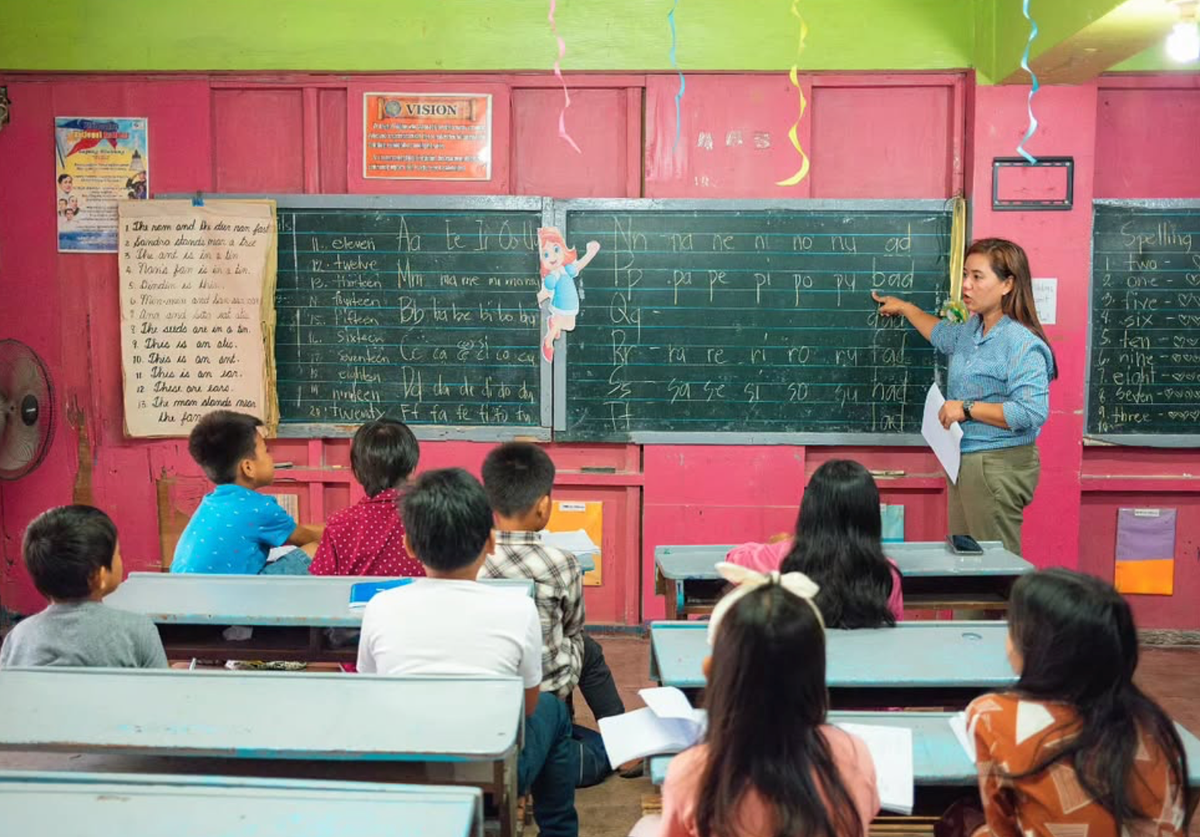
The truth is hard to face: our education system is producing graduates who are not learning deeply. And that failure begins early. The foundation of literacy and numeracy are built in the first few years of school, what we call Key Stage 1, which encompasses Kindergarten through Grade 3. This is where comprehension, critical thinking, and problem-solving should begin to take root. But instead, this stage is often treated as procedural formality. By the time they reach higher grades, they may be able to decode letters ad words, but not truly understand them. If children do not master these skills by Grade 3, the cracks in their learning only grow wider as they progress through school.
This failure of foundational learning is not just a technical failure, it is, as economist and philosopher Amartya Sen would put it, a failure of capability. Sen argues that true development lies in expanding real freedoms that people enjoy, and education, particularly literacy, is a foundational freedom. Literacy is not just about reading words, it is about expanding one’s ability to navigate the world, make informed choices, and participate meaningfully in society. Without functional literacy, the door to other capabilities–employment, political voice, health, dignity–remains closed.
Sen reminds us of that economic growth alone cannot guarantee progress and development. Likewise, increasing school participation or graduation rates cannot guarantee educational achievement. We must ask: what can our learners do with what they’ve learned? Are they gaining the capabilities they need to live the lives they have reason to value?
FLEMMS pulls back the curtain. It tells us that our problem is not just about poverty, internet access, or teacher shortages although all these matter. At the core, our crisis is about quality and coherence in foundational learning. We’ve focused so much on pushing students through the system that we’ve forgotten to ask whether they’re actually learning.
This is not a call to despair; it is a call to refocus. We must make Key Stage 1 a national priority. That means better teacher training specifically for early grade instruction. It means redesigning our curriculum to emphasize deep understanding over shallow coverage. It means investing in learning assessments that tell us how well students are learning, not just whether they showed up.
Let’s also reframe how we talk about literacy. It is not simply the ability to read a sign or write your name, it is also the ability to make sense of the world. It is knowing what a medicine label means, or how to interpret a job contract, or why a news article matters. It’s the foundation not just of academic success, but of human dignity and democratic participation.
If we want to improve PISA scores, if we want to raise a generation of critical thinkers and lifelong learners, we must start where it counts: in the earliest years, in the quiet corners of Grade 1 classrooms across the country. Let’s listen to what the data is telling us, and act accordingly. Because if nearly 19 million high school graduates cannot read with understanding, the real test is not on them. It’s on us.
